



Written by:

Medically Reviewed by:
Last Updated:
March 2nd, 2026
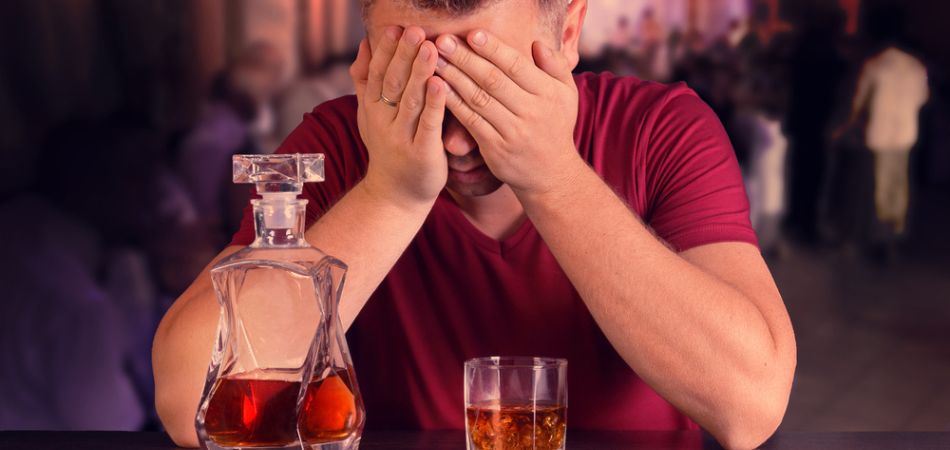
Most people who struggle with addiction have asked themselves some version of this question, even if they haven’t used these exact words. Why do I keep doing this? What am I actually looking for? The answer often comes down to two fundamental drives: seeking something that feels good, or escaping something that feels unbearable on your own. Understanding which one is driving your drug abuse or alcohol dependence can change how you think about your own patterns and what it might take to break them.
Two different engines for addiction
Addiction research has long recognised that substance use serves different psychological functions for different people. Very often, it serves different functions for the same person at different times.
Some people experience a rush of pleasure or confidence from drugs or alcohol that they’ve never felt before. The substance seems to unlock something, or make life feel more pleasurable or more worth living. In these cases, you drink or use drugs because of what they add.
For other people, the draw is almost the opposite, as the substance makes the bad things stop. These depend on the person, but drugs and drinking can quiet anxiety, temporarily lift depression, and help you feel more socially confident. In these cases, you use substances because of what they take away.
Both are powerful, and both can lead to dependence. But they tend to create different relationships with the substance and different experiences of addiction.
When pleasure is the driver
If your use began as a search for pleasure, it may have started recreationally. Drugs and alcohol can make you feel good, so you keep coming back to them.
Over time, however, the brain adapts to repeated exposure, and what once felt extraordinary becomes very much ordinary. This is tolerance, and it’s a biological process where the same dose produces less effect. It means you need more to feel the same thing, and eventually, you need it just to feel normal.
What started as chasing a high can then slowly become chasing a baseline. The pleasure fades, but the compulsion remains. Many people in this pattern no longer enjoy using substances, but they can’t stop. The initial reward has disappeared, but the habit has become automatic.
When pain is the driver
If your use began as a way to escape discomfort, the pattern often looks different from the start. You were seeking relief, and the substance worked, at least for a while. It numbed what needed numbing and helped you forget about feelings or worries for a little while.
This kind of use often has roots in experiences that predate the addiction itself, like trauma. The landmark Adverse Childhood Experiences Study found that people who experienced four or more types of childhood trauma were seven times more likely to develop alcohol dependence than those who experienced none. A more recent analysis of over half a million adults across 206 studies found that 55% of people with substance use disorders had experienced four or more adverse childhood events, compared to just 16% of the general population.
This connection between early pain and later substance use is not coincidental. However, while the substance becomes a solution to a problem, that problem doesn’t go away just because you’ve found a way to temporarily mute it.
This kind of substance use is sometimes described as self-medication, and there’s truth to that framing. The issue is that the medication stops working. Even worse, the pain often intensifies, both because it’s never been addressed and because addiction creates new sources of suffering.
Why most people are driven by both pleasure and pain
In practice, the two drivers rarely exist in isolation. Most people who develop addiction experience some combination of seeking pleasure and avoiding pain, often at different stages or in different contexts.
You may start using drugs or alcohol to feel good and continue using them to stop feeling bad. You may also begin to escape anxiety, but then enjoy the buzz you get on top. Reward and relief use the same brain systems, and both can become deeply ingrained. This overlap helps explain why substance use disorders and mental health conditions so often appear together and feed each other.
What often happens over time, however, is a collapse. This means you’re no longer chasing anything, you’re just stuck, using to avoid withdrawal, and because you don’t know what else to do. At this point, the question of pleasure versus pain can start to feel irrelevant, as the addiction now has its own momentum.

Why this question still matters
Even if the lines blur, understanding what first drew you to the substance and what keeps you returning to it matters a lot for recovery.
Research from the National Institute on Drug Abuse suggests that nearly half of people who use substances are doing so to manage existing mental health symptoms, and that mental health conditions often appear before the substance use begins, particularly in younger people (NIDA). Crucially, the pain usually comes first.
If your use has always been about escaping pain, then stopping the substance without addressing the root of that pain is unlikely to work long-term. You will either return to using or find another way to numb yourself. Recovery in this case isn’t only abstinence, but also means finding ways to cope with what you’ve been running from, and eventually dealing with it directly.
If your use began as pleasure-seeking, you may need to reckon with learning to tolerate or hopefully enjoy ordinary life. When your brain has been repeatedly flooded with artificial reward, normal pleasures can feel flat by comparison. Recovery involves allowing your brain to heal, recalibrate and rediscover satisfaction in things that don’t come with such a high cost.
For most people, both elements are present, which means recovery needs to address both.
How to recognise your drivers
Start by noticing what happens before you use. Do you crave drugs or alcohol because you are bored or feel empty? Or are you looking to take the edge off anxiety or shame? The answer might change depending on the day.
Then pay attention to what the substance does for you in the moment. Does it add something or remove something? Does it make you feel more or help you feel less? With practise, you can start to see patterns you hadn’t noticed.
Consider what you’ve been avoiding. If pain is part of what drives your use, that pain has a source. It may be current circumstances or something from your past that you’ve never fully processed. Identifying it doesn’t mean you have to solve it immediately, but acknowledging it is where it has to start.
If pleasure-seeking is part of your pattern, ask yourself what you’re actually seeking. If it is connection or a sense of meaning, then these are legitimate needs. The problem isn’t wanting them, but that addiction is a destructive way of getting them.
How treatment can help
Professional rehab support can help with understanding what is driving your addiction. Therapy approaches like cognitive behavioural therapy help identify triggers and develop healthier responses. Therapy that addresses trauma can work through experiences that often sit behind addiction. Medication can sometimes ease withdrawal or reduce cravings while you do the harder work.
Treatment also provides a space to be honest about what’s really going on. Many people have never told anyone the full truth about their use or what lies behind it. Saying it out loud to someone who won’t judge you can be where change starts.
Getting help from UKAT
Understanding why you use drugs or alcohol is one of the most important steps toward changing your life. Sanctuary offers support that addresses both the addiction and its roots. You don’t need to have everything figured out before you reach out. A conversation can help you start making sense of your own patterns and what kind of help might be right for you.
Get in touch today for a confidential chat.
(Click here to see works cited)
- Felitti, Vincent J., et al. “Relationship of Childhood Abuse and Household Dysfunction to Many of the Leading Causes of Death in Adults: The Adverse Childhood Experiences (ACE) Study.” American Journal of Preventive Medicine, vol. 14, no. 4, 1998, pp. 245-258.
- Madigan, Sheri, et al. “Adverse Childhood Experiences: A Meta-Analysis of Prevalence and Moderators Among Half a Million Adults in 206 Studies.” World Psychiatry, vol. 22, no. 3, 2023, pp. 463-471.
- National Institute on Drug Abuse. “Common Comorbidities with Substance Use Disorders Research Report.” National Institutes of Health, 2020, nida.nih.gov/publications/research-reports/common-comorbidities-substance-use-disorders.
- Substance Abuse and Mental Health Services Administration. “Release of the 2024 National Survey on Drug Use and Health.” SAMHSA, 2025, samhsa.gov/blog/release-2024-nsduh-leveraging-latest-substance-use-mental-health-data-make-america-healthy-again.

