




Last Updated:
March 5th, 2026
According to estimates, around 40% of medications taken by adults in the past year had the potential to interact with alcohol. With that in mind, it’s no surprise that many people search for whether certain antibiotics can or can’t be taken alongside alcohol, with Nitrofurantoin being one of them.
In this guide, we explore Nitrofurantoin and the potential risks that can arise when it’s mixed with alcohol.
What is Nitrofurantoin?
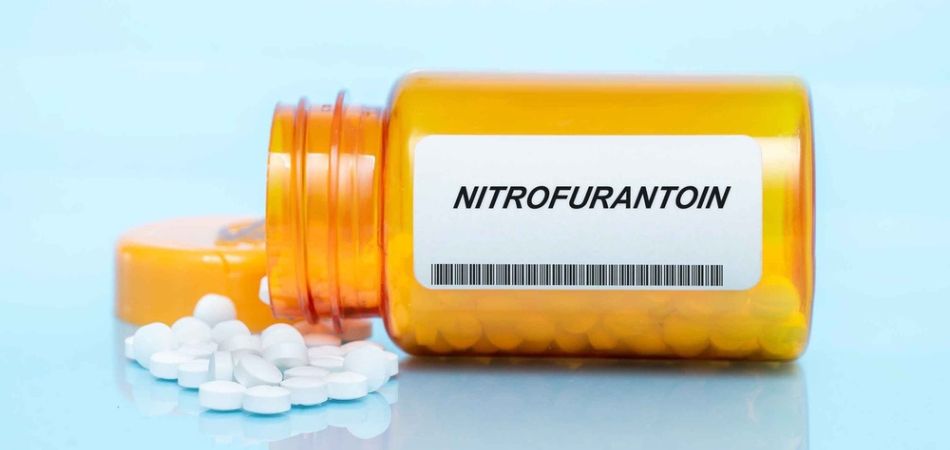
Nitrofurantoin is an antibiotic prescription drug that has been a first-line treatment for UTIs since the 1950s. It belongs to a class of drugs called nitrofurans and works by killing bacteria that are located in the urinary tract.
Many antibiotics circulate around the body in order to work, but Nitrofurantoin is different in that most of the dose is filtered out of the bloodstream into the urine shortly after you take it.
This means the drug concentrates in the bladder and urethrae, right where a lower UTI occurs, making it very effective for clearing these types of infections.
Nitrofurantoin is a well-established antibiotic and is considered safe for most people when used as directed. But what happens if you take alcohol and nitrofurantoin?
Is it safe to mix alcohol and Nitrofurantoin?
This is a critical question for many patients: Is it safe to drink alcohol while taking Nitrofurantoin? The answer requires a bit of nuance. From an official standpoint, there is no direct chemical interaction between Nitrofurantoin and alcohol.
Unlike a few other antibiotics that can cause an immediate severe reaction with alcohol, Nitrofurantoin does not fall into that category. In fact, the NHS explicitly notes that you can drink alcohol while on Nitrofurantoin, as alcohol doesn’t stop the antibiotic from doing its job. So, technically speaking, an occasional drink won’t neutralise the medication or cause a sudden toxic response in most healthy adults.
However, “no direct interaction” is not the same as “no risk,” and in the next section, we take a closer look at these dangers.

What are the dangers of mixing alcohol and Nitrofurantoin?
There are important reasons why doctors still recommend avoiding alcohol during any antibiotic treatment, including Nitrofurantoin. It comes down to how alcohol affects your body and how that might undermine your recovery or amplify side effects.
Below, we explore some of the dangers that could potentially occur when you mix alcohol and nitrofurantoin.
For example, if the antibiotic alone makes you a bit queasy, adding a few glasses of wine could turn that into severe vomiting. You might also find that alcohol’s sedative properties add to any Nitrofurantoin-related drowsiness, leaving you more impaired than you expected. For your own comfort and safety, it’s wise to avoid anything that could intensify side effects.
If you become too dehydrated, your kidneys may not work as efficiently to excrete the antibiotic, which could increase the risk of side effects or reduce the antibiotic’s effectiveness. Basically, drinking can work against the very things that help you get better: adequate hydration and rest.
To add to this, both alcohol and Nitrofurantoin are processed by the liver, and while taking a couple of antibiotic pills with a single drink shouldn’t poison your liver, heavy drinking while on the medication is a bad idea. Healthcare experts warn that combining regular alcohol consumption with an antibiotic can add extra stress on the liver and other organs, especially if you already have liver conditions or other health issues.
Given these factors, the prudent medical advice is to avoid mixing alcohol and Nitrofurantoin until you’ve finished the full course of antibiotics.
I’m finding it difficult to stop drinking alcohol while prescribed Nitrofurantoin
In some cases, the advice to “avoid alcohol for a week” is easier said than done. If you are finding it hard to stop drinking alcohol during your Nitrofurantoin treatment, it’s important to address this honestly. Difficulty abstaining from alcohol, even for a short-term health measure, can be a warning sign of alcohol dependence or an unhealthy drinking pattern.
If you’re in this spot and unsure of what to do next, the next few tips and words of advice can help you understand what to do next.
In some cases, this can be dangerous, which is why the next section is important to read.
For one, if you have been drinking heavily, stopping suddenly can sometimes cause withdrawal symptoms, which might require medical supervision. Also, if alcohol intake is ongoing, the doctor might monitor you more closely for side effects or choose a different medication.
The key point is don’t be afraid to be honest about your drinking. Healthcare professionals are trained to handle this information professionally and to assist you.
We offer confidential advice and clinical guidance without any judgement or any form of commitment needed from you. Our admissions teams regularly speak with people who are prescribed medication but are struggling to pause drinking, helping them understand what’s happening and what support might help next.
What are the next steps?
If you feel that talking through your options with qualified professionals is the next best step for yourself, reach out to Sanctuary Lodge today. We’re here to show you that support exists, and struggling to stop drinking during a prescribed course of medication is not something that needs to be faced in isolation.
(Click here to see works cited)
- White, Aaron. “Alcohol-Medication Interactions: Potentially Dangerous Mixes.” Www.niaaa.nih.gov, 2023, www.niaaa.nih.gov/health-professionals-communities/core-resource-on-alcohol/alcohol-medication-interactions-potentially-dangerous-mixes.
- Khamari, Balaram, and Bulagonda Eswarappa Pradeep. “Unlocking Nitrofurantoin: Understanding Molecular Mechanisms of Action and Resistance in Enterobacterales.” Medical Principles and Practice : International Journal of the Kuwait University, Health Science Centre, 2024, pp. 1–24, https://doi.org/10.1159/000542330.
- Hannemann, Kristianne. “Can You Drink Alcohol While Taking Nitrofurantoin?” Drugs.com, 4 Dec. 2025, www.drugs.com/medical-answers/you-drink-alcohol-taking-nitrofurantoin-3581474/.
- NHS. “Common Questions about Nitrofurantoin.” Nhs.uk, 12 Jan. 2022, www.nhs.uk/medicines/nitrofurantoin/common-questions-about-nitrofurantoin/.
- NHS. “Side Effects of Nitrofurantoin.” Nhs.uk, 12 Jan. 2022, www.nhs.uk/medicines/nitrofurantoin/side-effects-of-nitrofurantoin/.
- Feaster, Rachel. “Is It Safe to Mix Macrobid and Alcohol? Here’s What to Know.” GoodRx, 19 Feb. 2025, www.goodrx.com/macrobid/macrobid-and-alcohol. Accessed 10 Feb. 2026.

