



Written by:

Medically Reviewed by:
Last Updated:
May 19th, 2026

Cocaine nose is the informal term for the nasal damage that comes from snorting cocaine. Most people who take cocaine know it’s not great for their nose, but you may not understand how fast or how bad it can get. The effects of snorting cocaine on the nasal passages can be anything from mild irritation that clears up on its own to permanent structural damage that needs surgery to repair. Cocaine is the second most commonly used addictive illegal drug in the UK after cannabis, and snorting is by far the most common way people take it. That means a large number of people are potentially doing severe harm to their noses every time they use cocaine.
How cocaine damages your nose
Cocaine is a powerful vasoconstrictor, which means it tightens blood vessels. When you snort cocaine, the blood vessels inside your nose constrict sharply, cutting off the blood supply to the delicate lining of your nasal passages. Without enough blood getting through, that tissue does not get the oxygen it needs and cannot repair the irritation and inflammation that cocaine causes every time it passes through.
A cocaine high from snorting lasts somewhere between 15 and 30 minutes before the cocaine comedown phase, which means most people keep going back for more. Each line tightens the blood vessels again before the tissue has had any chance to recover from the last one. Over a night of use, the lining of your nose gets hit again and again without getting a chance to heal.
There is also the problem of what else is in the powder, as street cocaine is almost never pure. It is almost always cut with substances like levamisole, boric acid, benzocaine, and other fillers that add their own chemical burns on top of the damage the cocaine itself is doing. Some of these cutting agents are toxic to tissue, and because they vary from batch to batch, there is no way to know what you are actually putting into your nose.
Early warning signs of cocaine nose
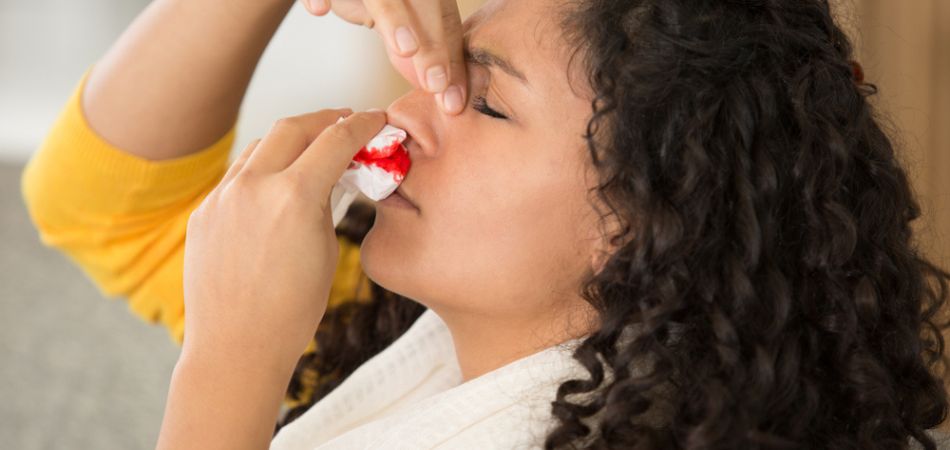
The first signs of nasal damage from cocaine can be easy to dismiss, and include:
- Frequent nosebleeds
- A stuffy nose that doesn’t get better with decongestants
- Crusting and scabbing inside your nostrils
- A burning sensation when you breathe in
- Not being able to smell as well as normal
These early cocaine side effects may be put down to hayfever, dry air, or a persistent cold or flu.
Loss of smell is one of the earliest and most overlooked signs. Cocaine damages the nerve endings responsible for your sense of smell in the upper part of the nasal cavity, and once those nerves are damaged, the loss can become permanent even after you stop using. Your sense of taste can also be affected by this damage.
However, if you catch the warning signs early enough, you can still turn things around by stopping or cutting back. The lining of the nose has a good blood supply under normal circumstances and can heal if given the chance.
The problem is that most people do not take these warning signs seriously enough. Because the symptoms come and go between sessions and are easy to explain away as other causes, the damage can build up so slowly that no single symptom feels like a big deal. It’s only when you look at the pattern as a whole that it becomes clear what is happening.
What happens if cocaine use continues
If the early signs are ignored and you keep using cocaine, the damage stops healing and creates chronic nasal issues. These can include:
- Constant inflammation
- Chronic facial pain
- Persistent headaches
- A constantly blocked nose
- Frequent sinus infections, which are difficult to treat because the tissue is too damaged to fight off bacteria properly
- A perforated septum
- Saddle nose deformity
- Septum perforation
- Cocaine-induced midline destructive lesion
No faq found!
Getting medical help for cocaine nose
If you are experiencing any symptoms of cocaine nose, you should see your GP or an ENT specialist right away. They will usually examine the inside of your nose, and in some cases, may use an endoscope or order a CT scan to see how far the damage goes.
For small septum perforations, a silicone button can be fitted to cover the hole and reduce symptoms. Saline rinses and ointments can help the tissue around it heal. Larger perforations need surgical repair, which can involve using healthy tissue from inside the nose to close the perforation or using cartilage grafts taken from your ears or ribs to rebuild the septum. These procedures can be effective, but they will fail if you keep using cocaine afterwards. The tissue cannot heal while it is still being damaged, and a repaired septum will just break down again.
Being upfront with your doctor about cocaine use is very important. Nasal damage from cocaine can mimic other conditions, including autoimmune diseases and certain cancers, and your doctor needs to know the actual cause to avoid unnecessary investigations and to treat you properly. Everything you tell them is confidential.
The bigger picture
Cocaine nose is often the most visible sign of a cocaine addiction that has been developing quietly due to long-term, heavy cocaine use. And that same level of use is likely affecting other parts of your body at the same time.
Cocaine puts serious strain on your heart, damages your liver, and affects your mood, motivation and even personality. Cocaine-related deaths in England and Wales have risen for 13 consecutive years, reaching 1,279 in 2024. If your nose is showing signs of damage, you need to seriously consider what cocaine is doing to the parts of you that you cannot see. Addiction is not always something people recognise until the evidence becomes impossible to ignore, and nasal damage is often what forces that recognition.
Getting cocaine addiction support through Sanctuary Lodge
If your nose is telling you something is wrong, you should listen to it. Sanctuary Lodge offers medically supported cocaine detox, structured cocaine rehab, and ongoing aftercare and alumni support after treatment. Get in touch with Sanctuary Lodge for free, confidential advice. If you are not sure whether you need help, that is often reason enough to get a professional opinion. Our admissions team can help you understand where things stand and what your options are.
(Click here to see works cited)
- National Institute on Drug Abuse. “Cocaine DrugFacts.” NIDA, 2024, https://nida.nih.gov/publications/drugfacts/cocaine.
- Office for National Statistics. “Drug Misuse in England and Wales: Year Ending March 2024.” ONS, 2024, https://www.ons.gov.uk/peoplepopulationandcommunity/crimeandjustice/articles/drugmisuseinenglandandwales/yearendingmarch2024.
- Nitro, Lara, et al. “Distribution of Cocaine-Induced Midline Destructive Lesions: Systematic Review and Classification.” European Archives of Oto-Rhino-Laryngology, vol. 279, no. 7, 2022, pp. 3257–3267, https://doi.org/10.1007/s00405-022-07290-1.
- Trimarchi, Matteo, et al. “Cocaine Induced Midline Destructive Lesions.” Rhinology, vol. 52, no. 2, 2014, pp. 104–111, https://doi.org/10.4193/Rhino13.112.
- Srinivasan, Siddharth et al. “Cocaine-Induced Midline Destructive Lesions-A Harbinger of Meningitis and Hydrocephalus.” Asian journal of neurosurgery vol. 20,3 627-630. 21 Apr. 2025, https://doi.org/10.1055/s-0045-1808235
- Andrews, Peter, et al. “Cocaine Induced ENT Pseudo-GPA (CIE pGPA).” ENT UK, British Society of Facial Plastic Surgery and British Rhinology Society, 18 Mar. 2024, www.entuk.org/resources/204/cocaine_induced_ent_pseudogpa_cie_pgpa/.

