



Written by:

Medically Reviewed by:
Last Updated:
May 19th, 2026
Liver disease is behind three-quarters of all alcohol-related deaths in the UK. The most recent ONS figures recorded 10,473 alcohol-specific deaths in a single year, and deaths from alcohol-related liver disease have risen by 46% over the past decade. That’s why understanding how alcohol-related liver damage happens and how to spot these signs is so important. While liver disease can be fatal, at every stage of its development, stopping drinking is the single best way to protect your life.
The job of the liver
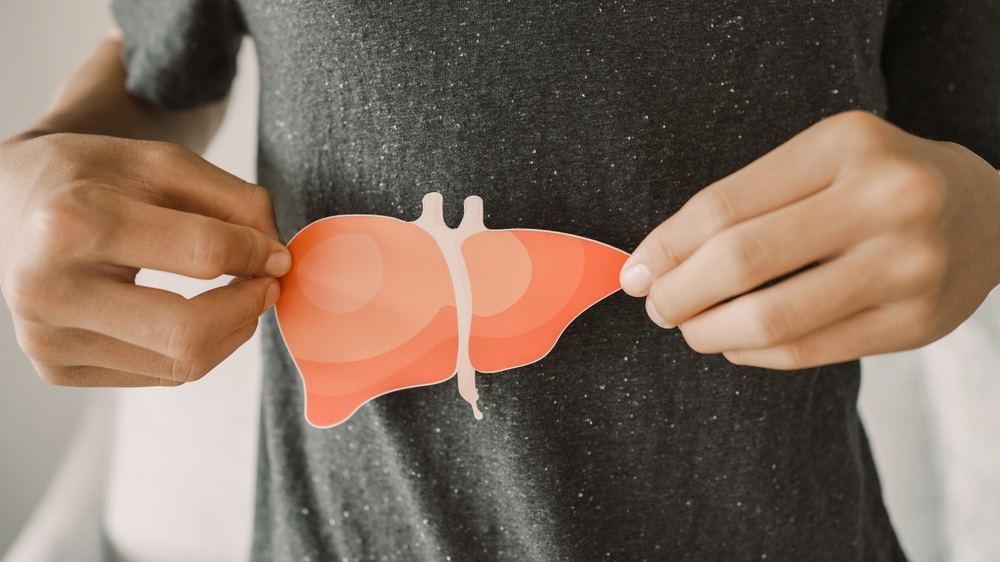
Your liver sits tucked under your ribs on the right side, and it does various crucial jobs. It produces the bile your digestive system uses to digest fat, stores glucose as a backup energy supply, and produces the proteins your blood needs to clot properly. It also filters out things your body needs to clear before they cause harm, including excess medicine and the waste products of normal digestion. Because blood from your digestive system travels through the liver before it goes anywhere else in the body, your liver gets first contact with everything you eat and drink. That includes alcohol.
How alcohol damages liver cells
Your liver breaks alcohol down in two stages.
First, the ADH enzyme (alcohol dehydrogenase) converts alcohol into acetaldehyde. Acetaldehyde is considerably more toxic than the alcohol it comes from. It binds to proteins and DNA in liver cells, disrupts their function and inflames the tissue around them.
A second enzyme (ALDH) then converts acetaldehyde into acetate, which your body can process more easily. However, this process uses up NAD+, a substance your liver needs to break down fat properly. When you’re drinking often enough to keep NAD+ running low, fat that would normally be processed starts collecting inside liver cells instead.
When you drink heavily, your liver also switches on a backup system involving an enzyme called CYP2E1 to deal with the extra alcohol it can’t process through the normal route. It produces unstable molecules called free radicals as byproducts, which damage liver cells. Your liver can recover between drinking sessions if it gets enough time, but if you’re drinking frequently, recovery doesn’t happen.
The four stages of alcohol-related liver disease
Liver disease from alcohol builds through four stages, and where you are in that process can determine what can still be fixed by stopping now.
Why are some people more vulnerable than others?
Around a third of people who drink heavily for many years will develop cirrhosis. While this is a huge number, it means two-thirds won’t. Several things determine which side of that line you may end up on.
Genetics plays a big part. There is a variant in the PNPLA3 gene, I148M, that appears to make it harder for the liver to clear fat from its cells. A large study drawing on data from more than 400,000 people in the UK Biobank found that people who had two copies of this variant, drank excessively, and were also obese were more than seventeen times more likely to develop cirrhosis.
Women are also at greater risk than men. They produce less of the enzyme that starts breaking down alcohol, which means more of it reaches the liver without being partially processed first. As a result, women tend to develop significant liver damage after fewer years of heavy drinking and at lower amounts.
Being overweight or obese, having type 2 diabetes, and having a concurrent hepatitis C infection can all also make the damage a lot worse.
Warning signs of liver disease
The British Liver Trust has reported that three-quarters of people diagnosed with cirrhosis in the UK are identified when the disease is already too far advanced for effective treatment. Part of that is because people come forward late, and part of it is because alcohol and liver disease don’t get screened for together as routinely as they should, even in people whose GP knows they drink heavily.
Fatty liver and fibrosis have no symptoms at all. Even mild alcoholic hepatitis can be easy to dismiss as just being a bit under the weather. A lot of people only find out something is wrong when a blood test taken for a different reason comes back with elevated liver enzymes.
When something does become noticeable, significant damage has usually already been done. The earliest warning signs at this point may include persistent tiredness, a dull heaviness on the right side just under your ribs, and losing your appetite.
Emergency liver symptoms include swelling in your legs or stomach with fluid, extreme confusion, and jaundice, where your skin and the whites of your eyes go yellow. This happens when a waste product called bilirubin, which your liver normally clears, starts building up in your blood instead. If you experience any of these, see a doctor as soon as possible.
Getting help before damage becomes permanent
If you’re a regular drinker and haven’t had your liver checked, you should ask your GP for a blood test. This can measure ALT and AST, the enzymes that rise when liver cells are under stress. If those come back raised, a FibroScan, which uses sound waves to measure how stiff the liver is, can show whether any scarring has developed. Where more detail is needed, an ultrasound or a liver biopsy can show exactly how far any changes have gone.
There is no drug that undoes scarring once it’s there. Stopping drinking is the most important thing at every stage, and the earlier you stop, the more of the damage can still be reversed. Fatty liver goes away with abstinence. At the hepatitis and fibrosis stages, quitting can halt the damage and allow some recovery. For cirrhosis, abstinence won’t reverse what’s already there, but it significantly improves your chances of surviving the years ahead.
Get alcohol recovery support with UKAT
If you’ve tried to stop and found it harder than you expected, it likely points to alcohol addiction. Sanctuary Lodges alcohol recovery support includes alcohol detox for the physical side of addiction, and therapy during alcohol rehab as well as aftercare for underlying and ongoing challenges. If you are worried about your drinking or you have already been diagnosed with alcohol-related liver damage, get in touch today for a confidential conversation.
(Click here to see works cited)
- British Liver Trust. “Sharp 46% Increase in Alcohol-Related Liver Disease Deaths across UK in Past Decade Raises Public Health Concerns.” British Liver Trust, 23 Apr. 2024, https://britishlivertrust.org.uk/sharp-46-increase-in-alcohol-related-liver-disease-deaths-across-uk-in-past-decade-raises-public-health-concerns/.
- Ceni, Elisabetta, et al. “Pathogenesis of Alcoholic Liver Disease: Role of Oxidative Metabolism.” World Journal of Gastroenterology, vol. 20, no. 47, 2014, pp. 17756–17772, https://doi.org/10.3748/wjg.v20.i47.17756.
- Kim, Hyun-Seok, et al. “Synergistic Associations of PNPLA3 I148M Variant, Alcohol Intake, and Obesity with Risk of Cirrhosis, Hepatocellular Carcinoma, and Mortality.” JAMA Network Open, vol. 5, no. 10, 2022, article e2234221, https://doi.org/10.1001/jamanetworkopen.2022.34221.
- NHS. “Alcohol-Related Liver Disease (ARLD).” NHS, 2024, https://www.nhs.uk/conditions/alcohol-related-liver-disease-arld/.
- Osna, Natalia A., et al. “Alcoholic Liver Disease: Pathogenesis and Current Management.” Alcohol Research: Current Reviews, vol. 38, no. 2, 2017, pp. 147–161, https://doi.org/10.35946/arcr.v38.2.01.

